News
Published
12 November 2026
Last Updated
16 November 2026
4 min read
DS Elcobyg in Hobro has introduced NovaClay as a new material in its concrete production. The Danish-produced clay product can replace 20 per cent of the cement in DS Elcobyg’s most widely used concrete mix while still meeting strength requirements.
At DS Elcobyg, a new material has become an option in concrete production. Called NovaClay, it is a calcined clay product that can be used as a partial replacement for cement.
NovaClay is produced by heat-treating clay to give it properties that make it suitable as a binder component in concrete. The product is supplied separately, allowing the amount to be tailored to each concrete mix.
DS Elcobyg has carried out both laboratory trials and production tests with NovaClay. The trials show that, as an initial step, the company can replace 20 per cent of the cement in a specific concrete mix while still meeting the necessary strength requirements.
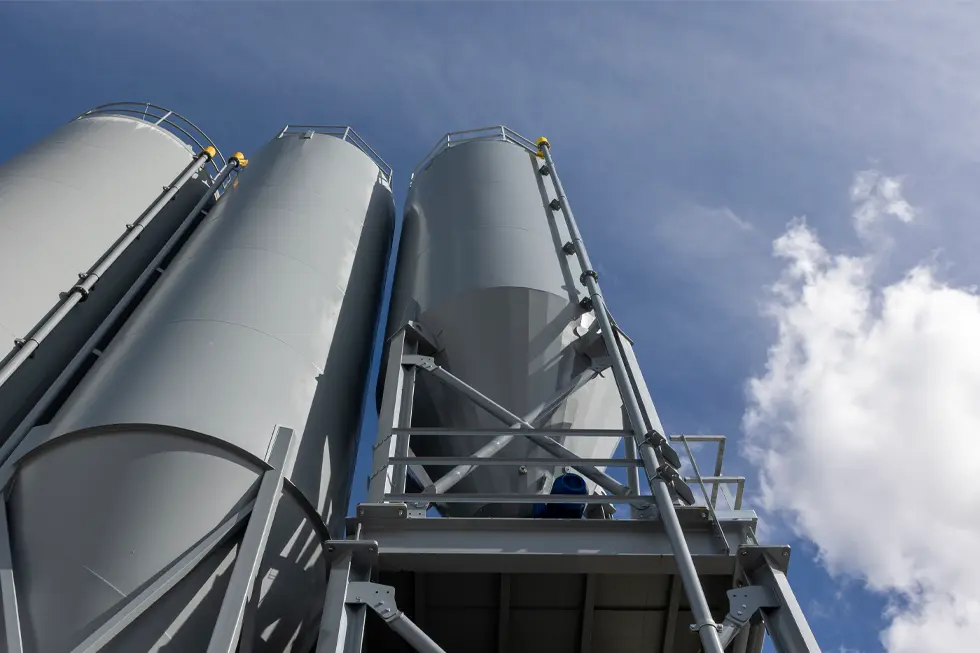
With a new silo dedicated to NovaClay, the company is now ready to use the material in precast concrete elements for customers who want this solution.
Before NovaClay became an option in routine production, DS Elcobyg carried out laboratory trials in Viborg in collaboration with the company’s admixture supplier. The product was then tested at the factory in Hobro, where the tests included casting two full-size precast concrete elements.
A key requirement has been that the material can fit into the existing production cycle, which requires casting every day.
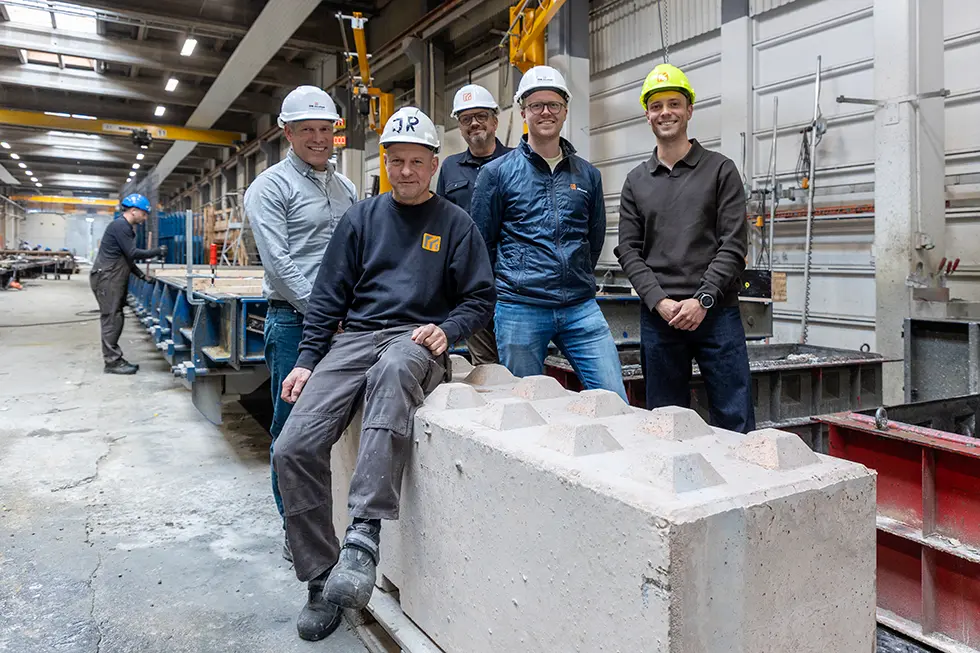
“The crucial factor for us has been maintaining early strength. We need to be able to remove the elements from the moulds after 15 hours. We can do that with NovaClay, and there have never been any problems with the final strength,” says Carsten Kronborg, Production Manager at DS Elcobyg.
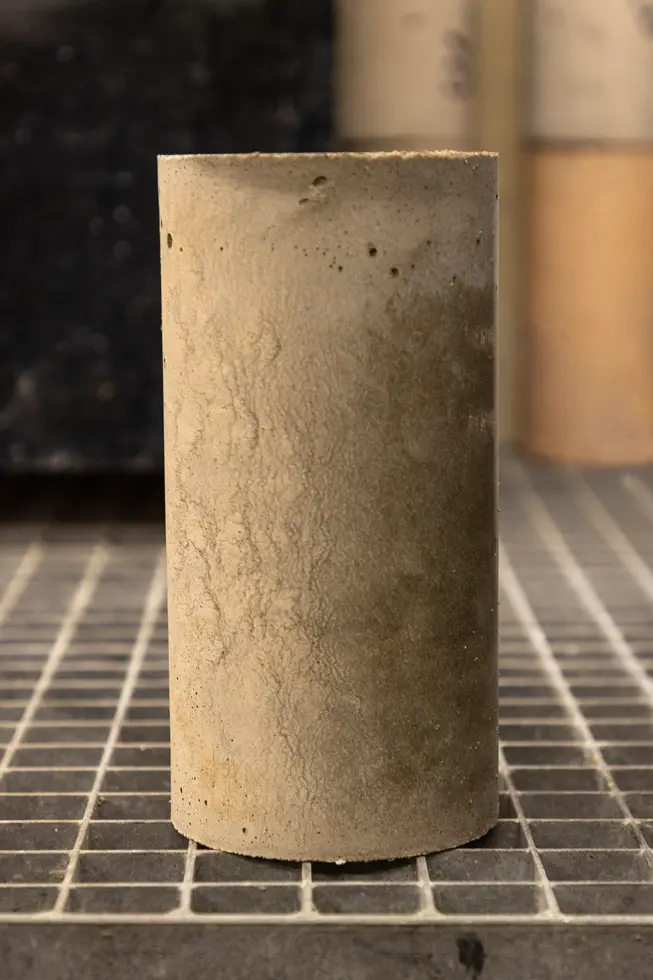
NovaClay also gives the concrete a warmer, more brownish shade. This is a characteristic that needs to be taken into account for precast concrete elements with exposed surfaces.
NovaClay is made from clay excavated in Denmark and processed for use in concrete.
For DS Elcobyg, the appeal is that the material can be incorporated into the company’s existing production methods, while both the raw material and the processing facilities are close to the factory in Hobro.
“In our case, it’s a fairly local product. Both the clay excavation site and the production site are within about 50 kilometres,” says Carsten Kronborg.
This local connection means DS Elcobyg is close to both the supplier and the raw material.
Cement is a major source of CO₂ emissions in concrete production. Replacing some of the cement with other binder components can therefore affect the concrete’s carbon footprint.
Based on preliminary calculations, DS Elcobyg expects the concrete mix with 20 per cent less cement to reduce the carbon footprint by 28.5 kg CO₂e per cubic metre of concrete compared with the company’s previous mix.
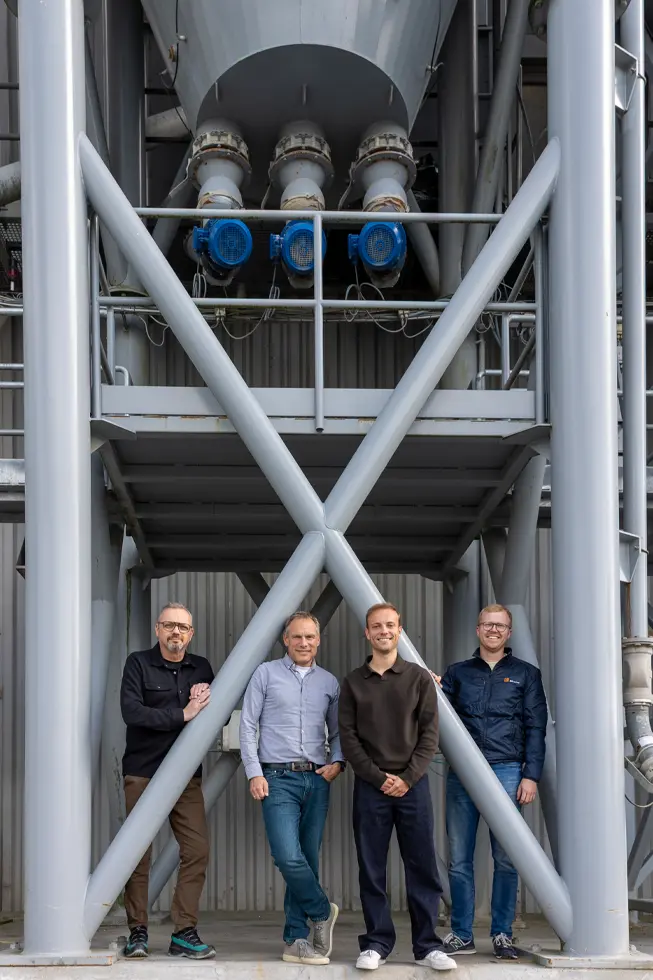
Preliminary calculations indicate an expected reduction of 28.5 kg CO₂e per cubic metre for the tested concrete mix compared with DS Elcobyg’s previous mix, achieved by replacing 20 per cent of the cement with NovaClay. The calculation covers A1-A3.
If the solution is used across all relevant production and the calculated reduction of 28.5 kg CO₂e per m³ can be achieved, this would represent a theoretical reduction potential of approximately 550 tonnes of CO₂e per year.
These are calculated projections, not documented reductions that have already been achieved. The final reductions will depend on factors including the concrete mixes used, the product’s updated carbon footprint data and customer demand.
DS Elcobyg has invested in a new silo for NovaClay so that the material can be incorporated into ongoing production when customers request it and the specific project is suitable for the solution.
The company is also continuing its development work, investigating whether NovaClay can be used in more concrete mixes and whether a larger proportion of the cement can be replaced.
“We’ve started with 20 per cent because we know it works. Now we need to see how much further we can go,” says Carsten Kronborg.
Under the current plan, the first precast concrete elements containing NovaClay are expected to be installed in a building in early 2027.
With NovaClay, DS Elcobyg has expanded its options for producing precast concrete elements with a lower cement content and can now offer the solution to customers who want to use it in their construction projects.
