
Articles
01 Sep 2026
Articles
Published
12 January 2026
Last Updated
16 September 2026
min read
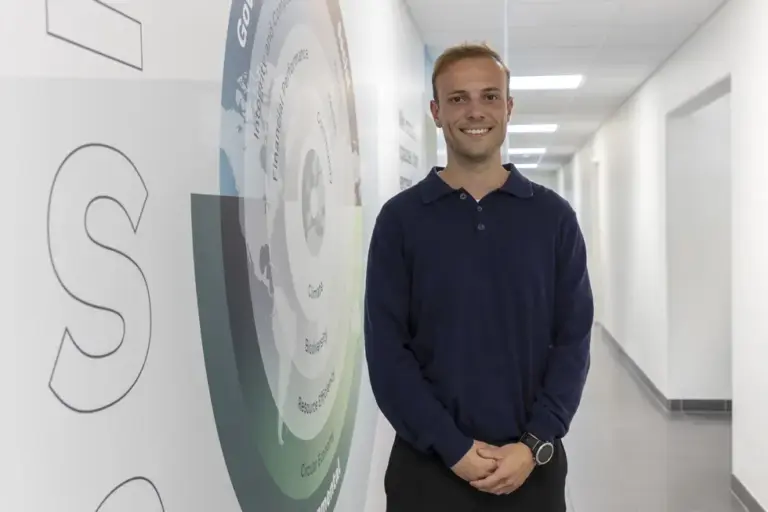
Although career dreams evolve over time, that does not have to mean saying goodbye to DS. Frederik Nøddebo Jensen knows this first-hand. In September, he officially made the leap from managing projects at his desk at DS Elcobyg to working on construction sites for DS Flexhal. A change that was made possible because his managers listened.
Frederik Nøddebo Jensen describes himself as someone who looks as though he ought to spend his working days on a construction site. Nevertheless, in May 2024 – having recently qualified as an architectural technologist – he secured a permanent desk job as a project manager at DS Elcobyg.
Frederik is 26 years old and now lives in Spørring, but he was born and raised in Risskov near Aarhus. He spends his free time with family and friends, unless he happens to be on the golf course.
Before joining DS Elcobyg, he had no experience of working for a manufacturing company. This is because architectural technology students are generally only introduced to what it is like to work for a design or consultancy firm.
But Frederik accepted the job because it sounded like a good opportunity.
“It was really exciting because I did not know much about concrete. My training was probably a little unconventional, as I was allowed to climb around on the casting tables in the production area for a couple of days so that I could learn how production worked, and I also spent time in the drawing office. It prepared me well for becoming a project manager in the concrete industry,” he says.
As he settled into the role, however, the project manager realised that something else was drawing him in. The desk was not where he felt most at home.
“What I discovered along the way was that the amount of energy I have in my body is too much for such a sedentary job. And I missed the coordinating aspect of construction management,” he explains.
Frederik believes this is something others could see right from the start of his employment.
“I think my boss at the time, Flemming (Hvidberg Madsen, ed.), could already tell back then that I might be better suited to working on a construction site,” he says.
But Frederik was nervous about how it would be received. So initially, rather than approaching his immediate manager, he contacted Anette Storm, CEO of DS Flexhal, whom he had met while searching for a job as a newly qualified architectural technologist.
“I asked her whether she could keep a secret because I was afraid to say anything at Elcobyg. What if I had been dismissed? Anette encouraged me to speak to Flemming, and he welcomed me with open arms. I felt a sense of relief when I spoke to him, and he said that it did not matter whether Flexhal needed me now or in six months – I would still have my position at Elcobyg,” Frederik explains.
“Knowing one another’s processes can save resources at both ends. It means being able to anticipate some of each other’s challenges. And right from the outset, I know what the design office at Elcobyg needs to make its process as efficient as possible.”
– Frederik Nøddebo Jensen
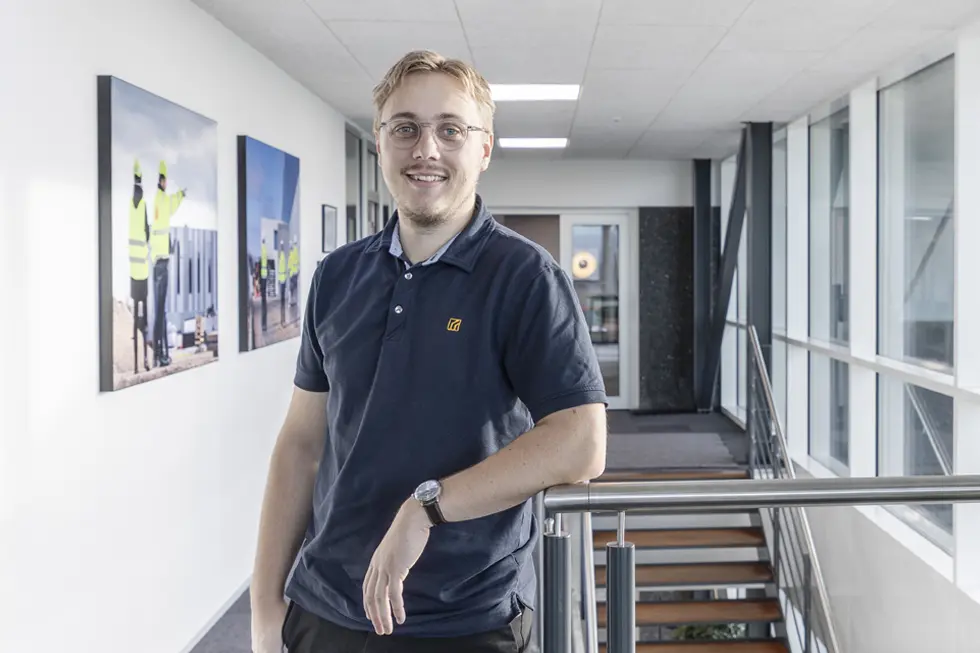
On 1 September this year, Frederik therefore began his new role as an assistant project manager at DS Flexhal. He was immediately assigned to a construction site in Sydhavnen in Aarhus, where DS Flexhal is building the Kulhuset multi-storey car park. He already knows that, for him, the most enjoyable part of working on a construction site is that you never quite know what you will encounter when you arrive at work. He is also pleased to be able to help solve the challenges that arise on site.
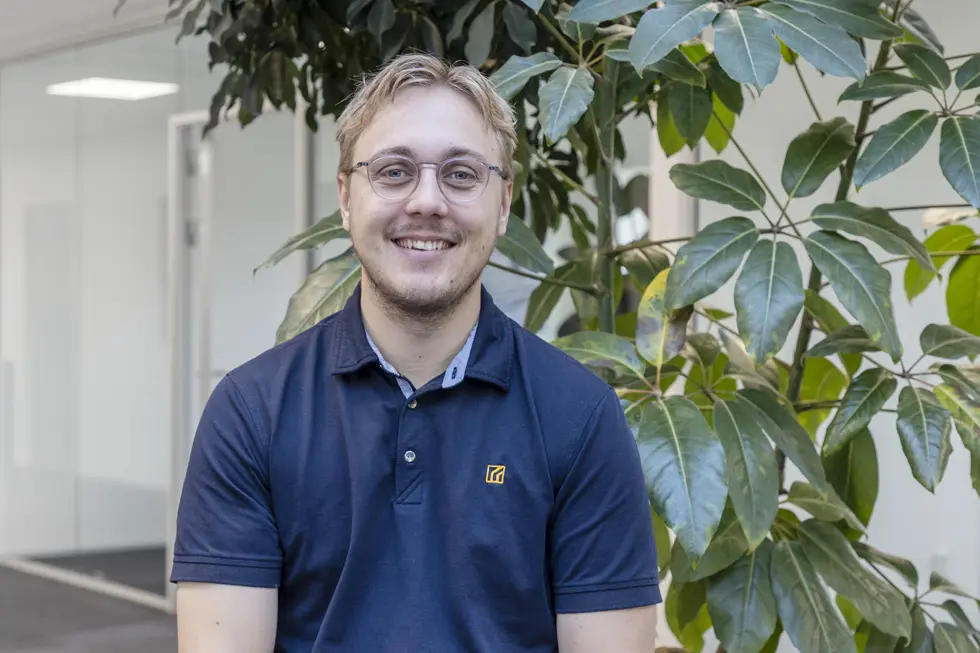
Frederik’s time at DS Elcobyg was both educational and enjoyable. He also got to know the company very well. He expects this to benefit both DS Elcobyg and DS Flexhal going forward – even though he has not been in his new role for very long.
“Knowing each other’s processes can save resources at both ends. It allows us to anticipate some of each other’s challenges. And right from the outset, I know what Elcobyg’s design office needs to make its process as effective as possible. When I become involved in the design phase of projects earlier on, this is something I will really be able to use,” he explains.
But he can already see how his connection to both companies has paid off.
“Now I know what it is like to sit on the other side of the table. Simply being able to take the marking plan onto the site while we carry out finishing work and hand over the elements means that I can give Elcobyg the exact element number if any issues are recorded. The more precise my record is, the easier and more efficiently the work can be completed when Elcobyg sends someone out to carry out the finishing work,” says Frederik.
About the Author
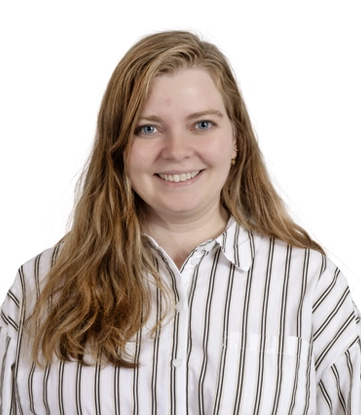
With a background as a trained journalist and marketing management graduate, Oline makes a strong contribution to digital communication across DS Gruppen. In addition, through her engaging writing style, she communicates both internally and externally – whether it is employee profiles, project news, organizational updates, or stories about our sponsorships. Oline also has prior experience with magazine articles, social media content, video, advertorials, and other areas within journalism and communication.
Articles
01 Sep 2026
Articles
06 Aug 2026
Articles
13 Jun 2026
Articles
12 Jun 2026
Articles
11 Jun 2026