Articles
Published
13 June 2026
Last Updated
16 September 2026
2 min read
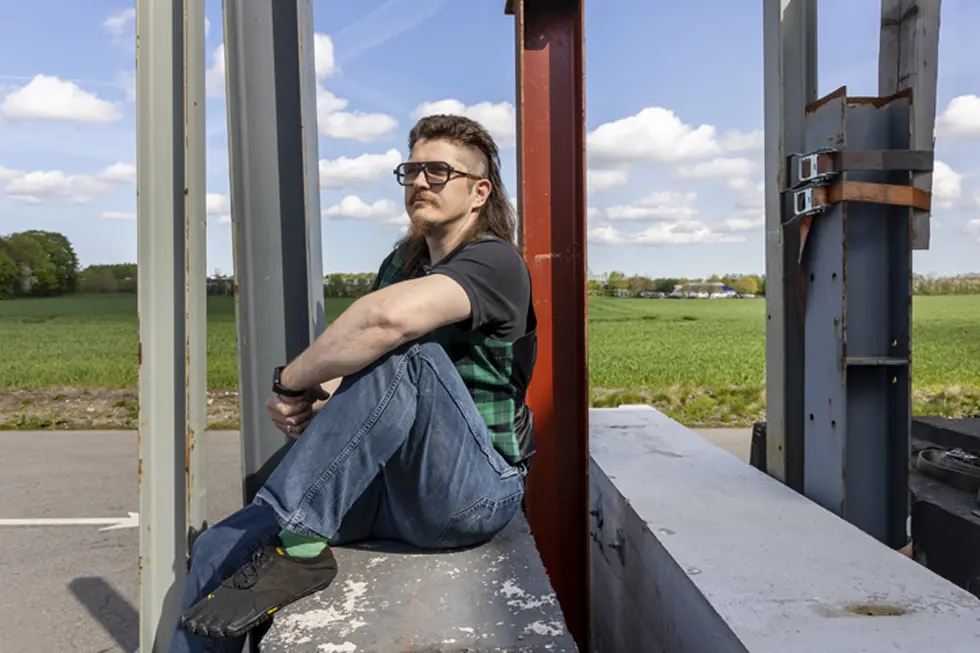
Now you are going to meet a DS employee who wears the label “nerd” with great pride. Ever since he was very young, he has taken electronics apart to find out WHY they worked. And Lasse brings this built-in “nerd app” to work with him in the PTA department at DS Stålkonstruktion, where he automates away routine tasks.
In PTA, Lasse Veirum Larsen prepares drawings for production. But alongside his daily work, he delves into automation and AI, and he sees great potential in eliminating routine tasks, leaving more time for work that requires human eyes, experience and careful thought.
Lasse turns 40 this year. He is originally from Hobro and lives in Stoldalen with his wife, Ilona, and their children, Liv, aged 10, and Ludwig, aged 6.
He trained as a metal fabricator and jokingly describes himself as “just an ordinary metalworker”. For Lasse, the journey from the welding workshop to the screens in the PTA department has been an entirely natural progression.
“Just because you’re a metalworker doesn’t mean you can’t end up doing the sort of work I do now, especially when you have a nerdy side. It’s brilliant,” Lasse says with a laugh.
Lasse joined DS Stålkonstruktion nearly 10 years ago. Before that, he had worked in a wide range of roles, including as a metalworker, personal assistant, service technician, maintenance technician and goods-in operative. Today, he handles what happens just before the steel is sawn, cut and processed in production: telling the machine how the steel should be cut.
Once the programs are ready, they are placed in a folder system so that colleagues operating the machines can find them. At the same time, paperwork is printed to signal the start of production. The operators can then find the correct order, retrieve the program and start the machines. The work involves both moving the parts through the system and optimising the process along the way.
“Our optimisation is our pride and joy. We must constantly try to use as little steel as possible.”
This means combining several orders on the same sheet, carefully assessing the positioning of the components, or splitting a larger component so that the material is used more efficiently. It may sound simple, but according to Lasse, the process requires an overall perspective, experience and a constant search for the smartest solution before the steel reaches the machine.
“A great deal of thought goes into constantly considering whether I can do this differently and whether this is the best way”.
In the PTA department, Lasse and his colleagues form the link between the drawing board and production.
“We essentially take everything the designers have created and convert it for the machines, so the cutting program can tell the machine how to cut the steel”.
Once the programs are ready, they are placed in a folder system so that colleagues operating the machines can find them. At the same time, paperwork is printed to signal the start of production. The operators can then find the correct order, retrieve the program and start the machines. The work involves both moving the parts through the system and optimising the process along the way.
“Our optimisation is our pride and joy. We must constantly try to use as little steel as possible”. This means combining several orders on the same sheet, carefully assessing the positioning of the parts or dividing a larger part so that the material is used more efficiently.
It may sound simple, but according to Lasse, the process requires an overview, experience and a constant search for the smartest solution before the steel reaches the machine. “A great deal of thought goes into constantly considering whether I can do this differently and whether this is the best way”.
The PTA department has six employees, and broadly speaking, they can perform the same types of tasks. This is entirely deliberate. This approach makes the department less vulnerable.
“Our mantra is that we should all be able to take time off. If one person is not here, someone else must still
be able to complete an order”. But this also means that many tasks are repeated time and again. And it is precisely these repetitions that Lasse has identified through the lens of AI and automation.
Lasse began looking into automation because he noticed the many small routines that recur in everyday work. These might include downloading files, moving them to the correct folders, opening applications and preparing for
the actual work.
“Everything involved in getting things into the application before we can process them further is, of course, a necessary part of the process. But that is not where our professional expertise lies. If we can automate that part, we will have more time
for the work that requires our experience and judgement.”
For Lasse, the solution is really a modern version of Lean – automating the fixed steps that do not require professional judgement, so that time can be spent where it creates the most value. He estimates that automation could eliminate 10–15 per cent of the department’s daily workload.
“If we eliminate the step where we first have to put things into an application before we can continue working on them, we could save an incredible amount of time in our day-to-day work. If we can automate that entire step, it would be a huge leap forward.”
– Lasse
Among other things, Lasse has worked with Power Automate, which can automate actions on a computer by
recognising buttons, images and fixed sequences on the screen.
“You can take screenshots and work through the entire process step by step, and then get it to perform the same
sequences every time.”
Automation is only the first part of Lasse’s idea. The next step is to combine fixed automated workflows with AI. He envisages a solution in which AI can help fill the gaps in the automated processes.
“If we can combine AI with automation, we might be able to gain another 10 per cent. That could perhaps bring us to a 25–30 per cent improvement in efficiency, because there are tasks we would no longer need to perform manually,” Lasse explains enthusiastically.
Lasse sees particular potential in a digital companion for himself and his colleagues. AI can make it easier to build small tools, workflows and automations without necessarily knowing how to code from scratch.
“It is almost like having your own personal developer sitting right next to you.”
For example, it could be an AI that moves XML files from emails to the correct folder, creates calendar appointments, finds data in projects or builds small supporting tools.
PTA coordinator Brian Bagger Pedersen, Lasse’s line manager, also sees opportunities in the enthusiasm Lasse brings to the department.
“Lasse shows great interest in AI, and I can clearly see that he is right that we can benefit greatly from this tool. It is important for managers to take responsibility for exploring the opportunities that our employees bring to our attention. There is no doubt that AI is the way forward. AI in production is about working smarter. Going to work should be enjoyable and positive, and if these opportunities can help with that, we welcome them.”
When discussing artificial intelligence and automation, one question quickly arises: What will happen to jobs? Lasse makes no secret of the fact that he thinks about this too.
“It is not as though we should make ourselves redundant. But if AI can take over some of the repetitive tasks, we can spend our time on the areas where we create the most value.”
And this development is essential. In the future, there will be fewer people in the workforce, so he believes that businesses will have to work smarter.
“If we do not adapt, we will suddenly become too expensive.” For him, it is about using technology wisely. Not uncritically, but not so cautiously that you stand still while others move forward.
“If we do not do it, we will suddenly lose out. We will be overtaken.”
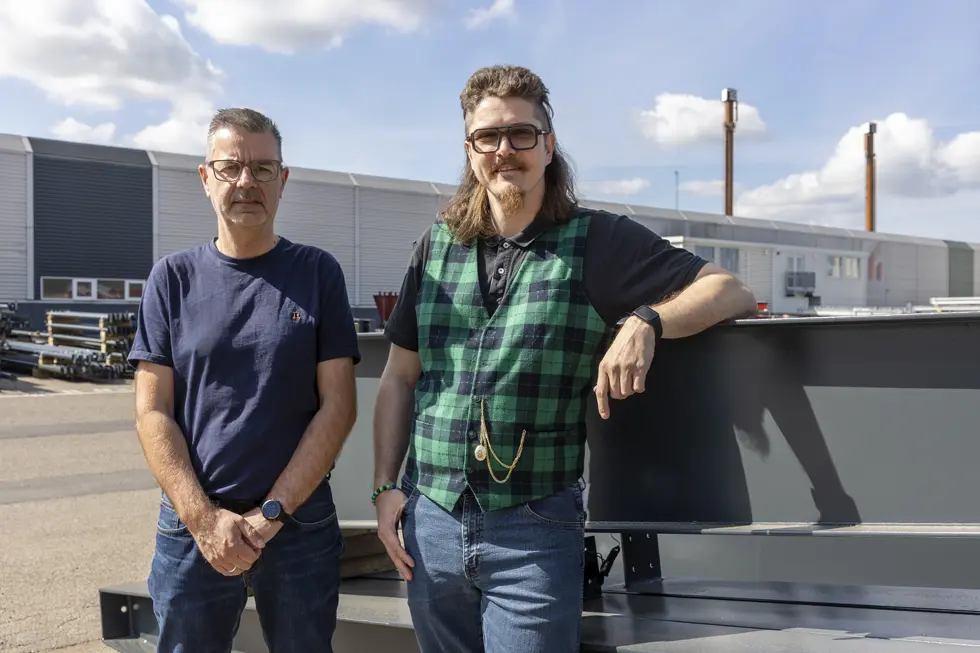
Lasse’s interest in technology is nothing new. When he was younger, he took phones and computers apart, deleted operating systems and installed new ones, just to see what would happen. If something broke, he had to work out how to fix it again.
“It’s trial and error. That’s all I’ve ever done.”
He now takes the same approach to AI. He builds, tests, breaks things and builds again. Sometimes it works. Other times it goes wrong, and then he has to roll back to an earlier version.
“I think I’ve killed James six times so far,” says Lasse with a laugh.
James is Lasse’s digital butler at home, and although he occasionally buckles under the strain of Lasse’s enthusiastic experiments, he can already help with quite a few things. For example, James can create calendar appointments from email invitations, help Lasse’s Lithuanian wife with Danish phrasing and answer his daughter’s questions.
Lasse has even built some clear boundaries into James. If his daughter asks about something unsuitable for a 10-year-old, James is programmed to refer her to her mum and dad.
“That’s what’s so incredible. You can actually build a digital assistant that can both handle practical tasks and recognise its own limitations, and I simply want to find out what the technology can really do – 100 per cent,” explains Lasse.
When Lasse talks about AI in the workplace, it is not about embracing the technology uncritically. Security must be in place, and sensitive information must remain within DS. That is why he sees particular potential in local solutions where AI is clearly restricted and only allowed to do what it has been set up to do.
“If there is such a thing as a DS secret, this is the only place you’ll find it.” For Lasse, the next step is to explore the technology more purposefully in practice. Not as a finished solution, but as a path for development where it is possible to test how AI can make day-to-day work smarter, including in other departments with many repetitive processes.
“We need to move forward. We need to have the courage to explore the possibilities and make room to try things out in practice.”
– Lasse.
And if anyone is still in any doubt, one thing becomes quite clear after talking to Lasse – he is not the type to wait for the future to come knocking. He has already taken the doorbell apart to see whether it can be automated.
Just before wrapping up, he also reveals that one of his big boyhood dreams is to build his own game. Because, of course, Lasse is a gamer. And here, just as at work, he sees AI as a tool that can make the journey from idea to reality a little shorter.
About the Author
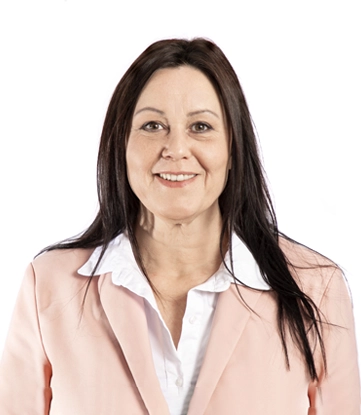
With her solid experience as both a graphic designer and art director, Fie sets the visual direction for communication across the companies in DS Gruppen. With a sharp eye for design, she ensures that the visuals support the message and capture attention. Fie also brings many years of experience as both a writer and photographer, including from her time working in publishing and running her own advertising agency. Her background also includes extensive experience with visual communication for both B2B and B2C audiences.
