
Articles
01 Sep 2026
Articles
Published
11 January 2024
Last Updated
16 September 2026
15 min read
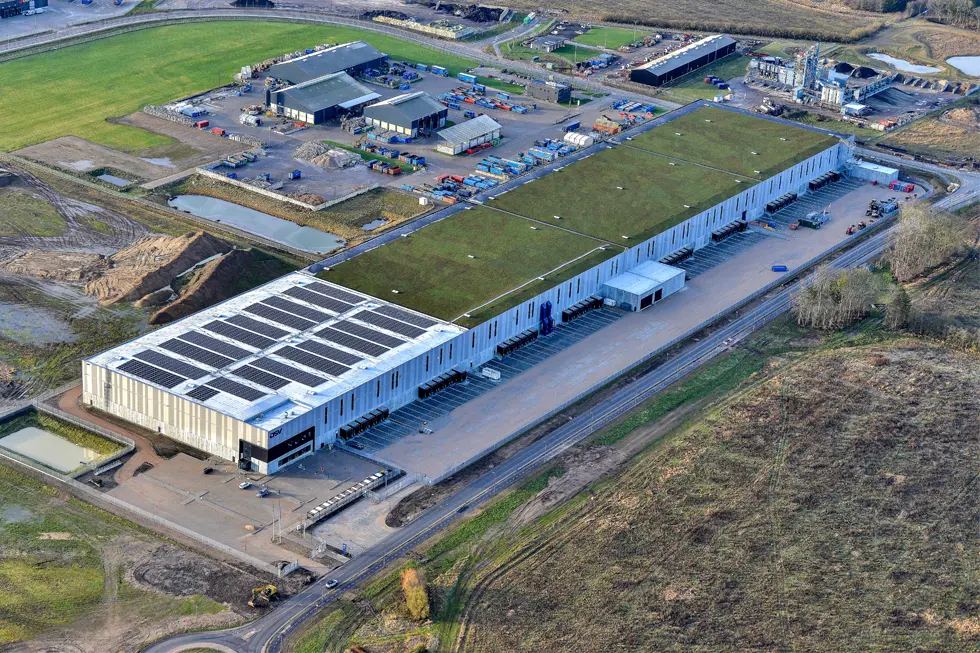
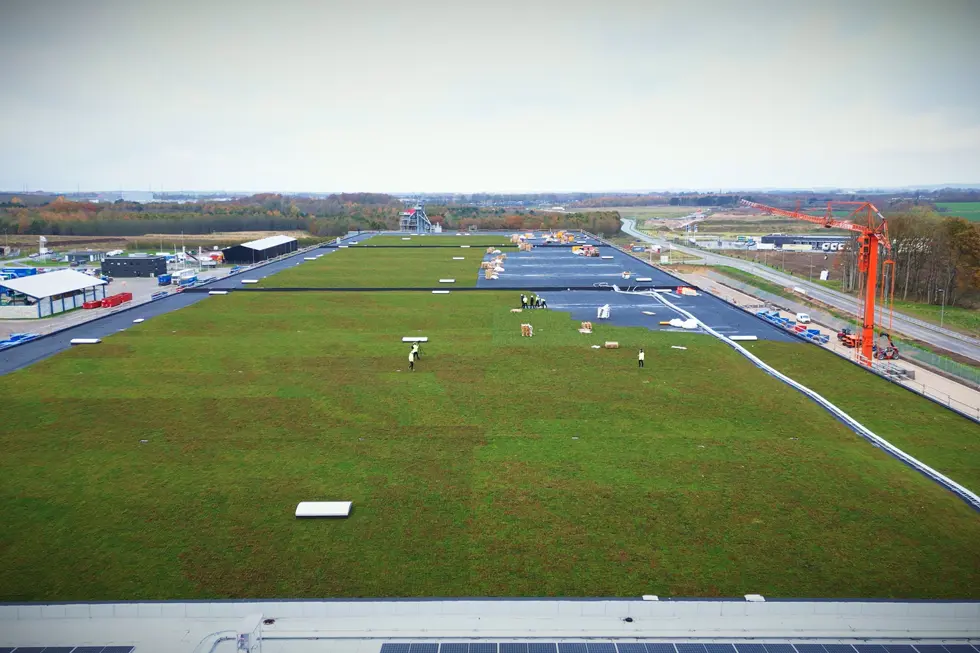
A 23,688 m² sedum roof now adorns DSV’s newest logistics hall in Ringsted, where DS Flexhal was the main contractor. The project’s sustainable drainage solution had to be rethought, and a sedum roof from Nature Impact proved to be the answer. Without the green roof, the hard-surfaced area amounted to 89%, but the sedum’s water-retention capacity meant that it could be calculated at 60%, thereby complying with the local development plan.
Can you imagine standing and looking out over just over two hectares of land? If hectares are not your strong point, can you imagine 23,688 m², equivalent to approximately 169 average detached houses, forming one large, continuous green surface? Probably not, as nothing like it has ever been seen before in Scandinavia. Scandinavia’s largest green roof is now located on DSV’s new logistics centre in Ringsted. The logistics centre has been fitted with a green sedum roof offering substantial water-retention capacity.
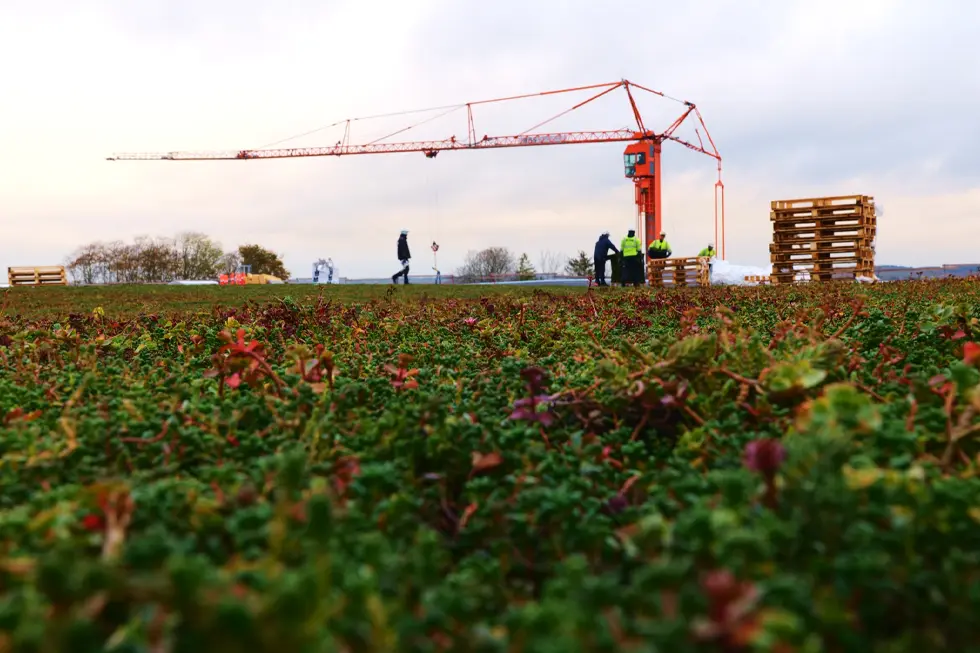
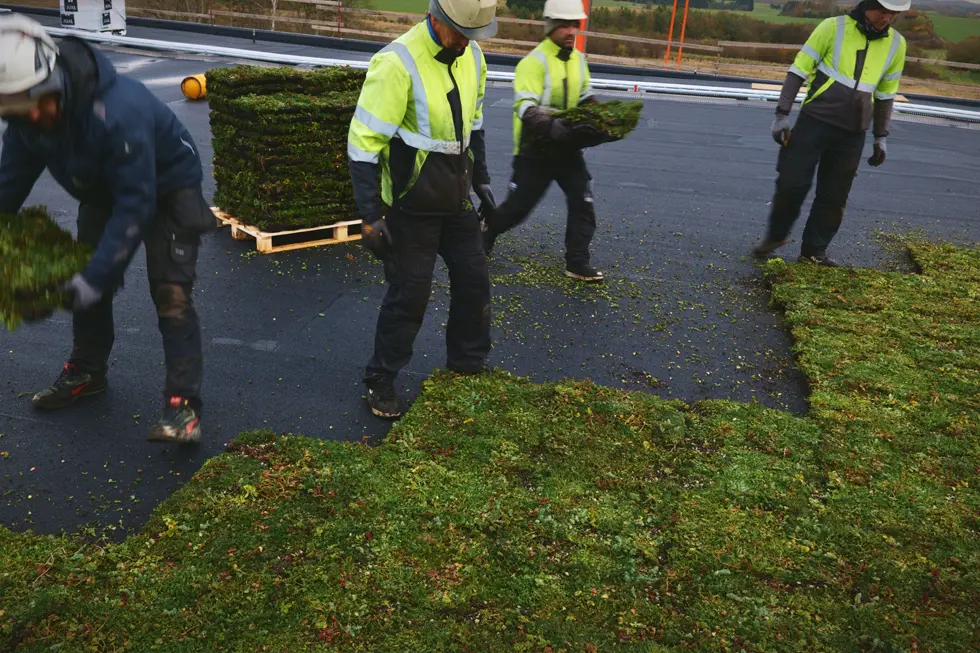
Christian Møller, Project Manager at DS Flexhal, says: “For the sedum roof, we chose the tray solution from Nature Impact, and our subcontractor Phønix Tag Aarhus handled the installation. The trays are easy to handle, and the work proceeded as planned. We now have a large, attractive sedum roof.”
DSV bought the site in Ringsted many years ago while planning its new headquarters. However, it later emerged that the headquarters would be located in Hedehusene, while Ringsted’s central location made it an ideal site for a new FMCG (Fast Moving Consumer Goods) logistics centre. However, fitting a 45,011 m² logistics centre onto the site was not without its challenges. Unfortunately, the sustainable drainage solution on which the construction plans were based meant that the building would be too small. A new approach was therefore required.
“The site is flat and does not have particularly good drainage. We have therefore chosen, among other things, to install a sedum roof on the hall, which can retain rainwater. This means that the impermeable area can be calculated at 60% instead of 89%, thereby complying with the applicable requirements in the local development plan. We have now completed the project, and we are proud to contribute to realising DSV’s vision through pioneering construction solutions,” concludes Christian Møller.
Most forecasts agree that there will be no less rainwater in the future. The prospect of even more water is being felt by Denmark’s largest manufacturer of sedum roofs, Nature Impact. Carl Johan Larsen, owner and CEO of Nature Impact, explains: “In the past, our sedum roofs were primarily sought after for their aesthetic appeal. Fortunately, the construction industry has also recognised the many other beneficial qualities of sedum roofs. We are experiencing growing demand for water retention and increased biodiversity.”
The ability of a sedum roof to retain water is precisely what Nature Impact has tested. In collaboration with Krüger, rainwater measurements have been carried out since 2014 at the Mølleåværket facility, operated by the Lyngby-Taarbæk utility company, as well as on the roof of Nature Impact’s own office in Ringe. The various locations featuring full-scale tests provide reliable, concrete measurements.
“Green roofs are the future and should be incorporated into building design. There is no point in risking sewer flooding when we can prevent it, and sedum roofs can be one of the solutions. As with this project, incorporating a green roof as part of the sustainable drainage solution can also help bring a project to fruition as intended,” concludes Carl Johan Larsen.

About the Author
With a background as a trained journalist and marketing management graduate, Oline makes a strong contribution to digital communication across DS Gruppen. In addition, through her engaging writing style, she communicates both internally and externally – whether it is employee profiles, project news, organizational updates, or stories about our sponsorships. Oline also has prior experience with magazine articles, social media content, video, advertorials, and other areas within journalism and communication.
Articles
01 Sep 2026
Articles
06 Aug 2026
Articles
13 Jun 2026
Articles
12 Jun 2026
Articles
11 Jun 2026