
Articles
01 Sep 2026
Articles
Published
14 January 2026
Last Updated
16 September 2026
7 min read
DS Stålkonstruktion and its subsidiaries deliver more than 1,000 pro jects a year. Working as one unified technical department, employees from three locations – Hobro, Ljubljana and Wrocław – collaborate closely. Tasks, tools and knowledge flow across national borders. This requires trust, close dialogue and a strong shared mindset: One Team, One Company.
More than a thousand a year. That is how many different projects DS Stålkonstruktion’s technical department handles. Not from one office in Denmark, but from three different locations that share tasks, tools and day-to-day work: the head office in Hobro, DS Skanding in Ljubljana, Slovenia, and DS Engineering in Wrocław, Poland.
DS Engineering was established by DS Stålkonstruktion in 2019. DS Skanding began as an independent company that was brought in as a subcontractor to assist with projects, until DS Stålkonstruktion acquired the company in 2016.
From the outside, it may look like a well-oiled machine, and today it is. But those involved know that it has taken years of training, trust and a great deal of communication.
When two Slovenian colleagues visited Denmark in November, EKKO’s editorial team took the opportunity to speak to them about how collaboration between the three locations works. The same applies to both the Slovenian and Danish colleagues: it feels like one shared office, simply spread across three countries.
“We are no longer a subcontractor. We are like an extension of the parent company, an office outside the head office. We do exactly the same work, use the same software and are integrated into the same systems. The only things that distinguish us are our location and nationality,” says Matej Janič, Managing Director of DS Skanding.
When the collaboration began, DS Skanding was an independent company to which DS Stålkonstruktion assigned tasks.
“In the beginning, it was Matej and a colleague who were the first people we worked with, completing a couple of projects for us. Gradually, we began relying on them more and more for assistance,” says Michael Esko Nielsen, team leader and Tekla manager.
At the time, DS Skanding was carrying out assignments for several different customers. But it gradually became difficult to ignore both how skilled the Slovenian engineering office was and how closely its approach to completing assignments matched that of DS Stålkonstruktion. Today, DS Skanding is fully integrated, and the department has grown to 31 employees.
By comparison, DS Engineering has also grown rapidly. From 2019, when the company was founded, to the present day, it has grown from one to 50 colleagues.
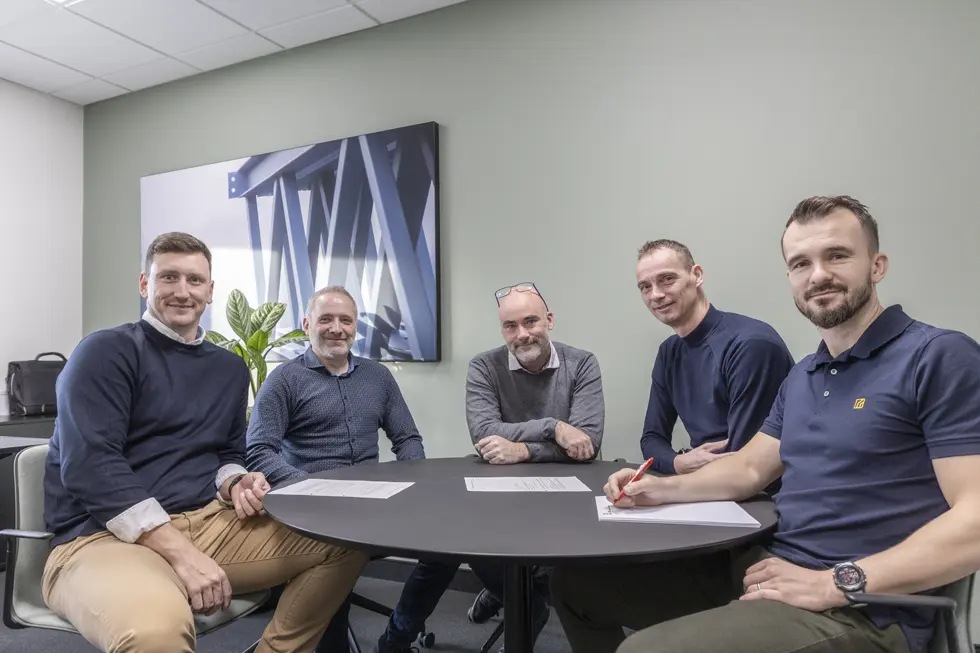
DS Skanding is not “just” a project office. It is part of a single, unified technical organisation.
“At DS Stålkonstruktion, we have one technical department spread across three locations: Hobro, Ljubljana and Wrocław. All three locations work in exactly the same way. We work on the same projects, share assignments and speak to one another daily,” explains Mirza Ahmetagić, team leader for structural engineering.
This requires both coordination and a systematic approach.
“We have scheduled meetings every day: a morning meeting with the team leaders and a joint meeting for the structural engineers and draughtspeople. We review the plan, assignments, deadlines and where assistance is needed across the different locations,” says Michael.
Marko Jovanovski, team leader for the engineers at DS Skanding, describes day-to-day life in Ljubljana:
“We start by coordinating and allocating resources, deciding who does what, setting deadlines, identifying what we are missing, checking whether we are on schedule and ensuring we have all the information needed to work on the project. We have both newly qualified and experienced colleagues, and we spend part of the day sharing knowledge, answering questions and helping whenever someone gets stuck,” he explains.
Today, all colleagues talk about One Team, One Company. But this mindset did not emerge by itself. As DS Skanding and DS Engineering grew, Technical Manager Jens Hald set the direction.
“When the Polish operation grew significantly, and Slovenia was also expanding, concerns naturally arose about whether some of the departments might have to close or relocate. Jens made sure that we held meetings, established a direction and secured everyone’s understanding,” Michael explains.
The mindset was easy for the colleagues abroad to adopt.
“We already shared the same values and ways of working. The cultures were very similar,” Matej explains.
Today, it is an integral mindset, and this is clearly reflected in the work shared by the three locations.
“You cannot tell where a job was completed – whether it was in Poland, Slovenia or Denmark,” Michael says.
When tasks move back and forth between three countries, a common language and clear communication are essential.
“I do not think everyone is always aware of how much effort it takes to make it work. Our colleagues in Slovenia and Poland are far removed from daily life in Hobro, so they need to receive all communication on an ongoing basis; otherwise, it all falls apart,” Michael explains.
The team in Slovenia shares the same view.
“We speak every day, perhaps several times a day. We do so because we have so many tasks that need to be synchronised,” Marko says.
That is why English is the natural common language.
“When you come for a job interview at DS Skanding, you are not necessarily prepared for one of the first questions to be ‘Can we conduct the interview in English?’ It is simply our way of seeing whether the candidate understands and can make themselves understood,” says Matej.
Cultural differences also play a major role in the collaboration.
“One example is Danish dark humour. Sometimes our international colleagues misunderstand the tone and may think that we are angry. But it is simply the way we speak,” says Michael.
At the same time, the team in Hobro has also had to get used to a different style.
“In Slovenia, they are a little more temperamental, but in a positive way. You notice it most at parties and team-building events. But they are extremely professional,” Michael says with a smile.
And Marko agrees:
“We are southern Europeans. We are louder and a little more temperamental,” he says.
The need to outsource work to two additional offices is not about costs. It is about capacity.
“When a new colleague wonders why we have offices abroad, the answer is simple: Demand is too great to handle from a single location,” says Mirza.
“And labour. When it comes to drafting, we can barely find anyone here in Denmark. We might get one candidate for a position. In Poland, for example, we get seven candidates for one position, and all seven are good,” adds Michael.
The standard is so high in Poland and Slovenia, and DS Stålkonstruktion receives many more qualified applications for each position than it does in Denmark.
“We reject people there whom we would have hired on the spot here. There simply are not enough candidates in Denmark,” Mirza explains.
Although coordination and technical processes take up a great deal of time, relationships form a major part of the foundation. Polish and Slovenian colleagues are sent to Hobro after just a few months, and the Danish team leaders regularly travel to both Ljubljana and Wrocław.
”The social aspect means a great deal. It makes a difference to see the production facilities, the construction sites and colleagues. Simply meeting people in person makes a difference,” says Mirza.
”I have been travelling to Denmark for more than 10 years. I do not feel like a guest. I feel at home at the parent company, and that is generally how I feel all the time.” – Matej
Michael feels the same way: ”Our task is to make them feel that they are part of our team. When they walk through the door in Hobro, it should feel like their own office.”
And Matej concludes:
”I have been travelling to Denmark for more than 10 years. I do not feel like a guest. I feel at home at the parent company, and that is generally how I feel all the time.”
About the Author
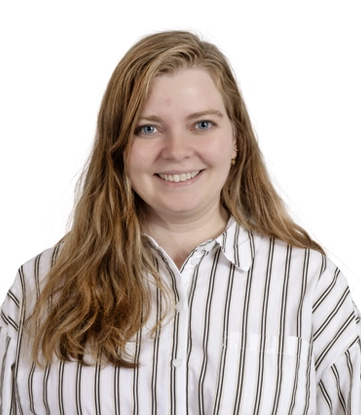
With a background as a trained journalist and marketing management graduate, Oline makes a strong contribution to digital communication across DS Gruppen. In addition, through her engaging writing style, she communicates both internally and externally – whether it is employee profiles, project news, organizational updates, or stories about our sponsorships. Oline also has prior experience with magazine articles, social media content, video, advertorials, and other areas within journalism and communication.
Articles
01 Sep 2026
Articles
06 Aug 2026
Articles
13 Jun 2026
Articles
12 Jun 2026
Articles
11 Jun 2026