

Articles
01 Sep 2026
Articles
Published
13 January 2026
Last Updated
16 September 2026
7 min read
Architects would not touch concrete with a bargepole. Concrete is like tobacco or crude oil. Cement is a dirty word. It is not easy to sell concrete in a construction industry that has branded the material a sustainability and CO2 emissions offender. The concrete industry therefore faces the major task of changing its image – particularly among architects and ordinary Danes.
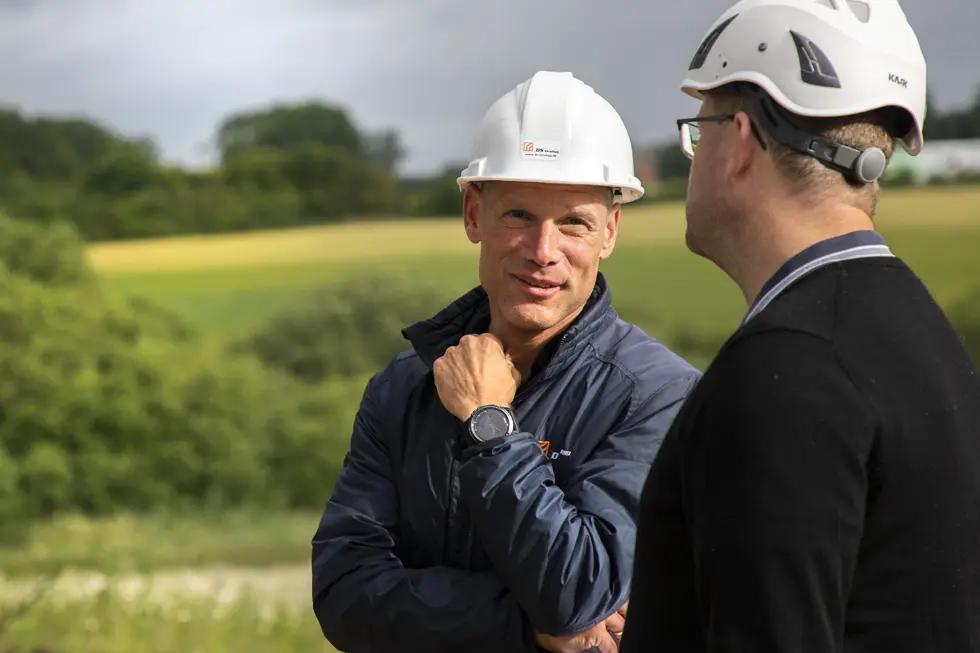
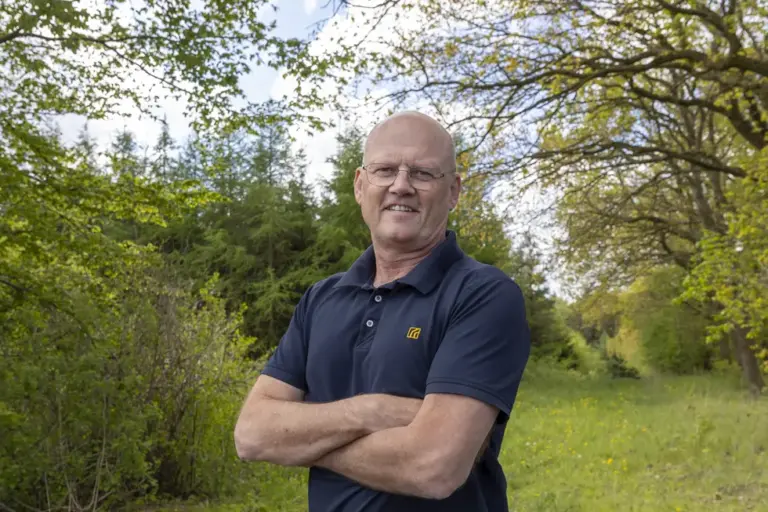
The Danish concrete industry is in the midst of what can rightly be called a revolution. Behind the scenes, the industry is working to find a new path through a construction landscape where concrete has become a dirty word and cement is completely taboo. Flemming Hvidberg Madsen, Head of Sales and Marketing at DS Elcobyg, experiences this every day when he meets architects who would prefer to build with anything but concrete.
“Perceptions of concrete have become distorted because the concrete industry has not marketed itself to ordinary Danes in the same way that, for example, the timber industry has.”
– Flemming Hvidberg Madsen
In 2019, the concrete industry came together and decided to reduce its CO2 emissions by 50% by 2030 compared with 2019 levels. Just a few years later, it was clear that this target had already been met. They therefore raised it to 70%. In January 2026, they will raise the target further to 90% because the cement industry is increasing its ambitions, enabling concrete as a product to have an even lower footprint. The concrete industry is ambitious on behalf of the planet and is conducting extensive tests involving, among other things, alternative binders to cement.
Nevertheless, concrete has become the black sheep of the construction industry.
“Unfortunately, those of us in the concrete industry are at the bottom of architects’ rankings. If they can choose another material, they will. They see us as being like tobacco or crude oil,” Flemming explains.
The task is not only to communicate to the average Dane what kind of material concrete is. It is also about influencing some of the industry’s stakeholders to take concrete more seriously. Flemming believes that architects in particular have a negative view of how they can use concrete in construction, and the material is most often associated with Brutalism and social housing developments from the 1960s and 1970s, such as Gellerupparken in Aarhus.
“Perceptions of concrete have become distorted because the concrete industry has not marketed itself to ordinary Danes in the same way as, for example, the timber industry has,” Flemming explains.
“It is a major task for the industry.”
In 2019, the concrete industry came together and decided that it would reduce its CO2 emissions by 50% by 2030 compared with 2019 levels. Just a few years later, it was clear that this target had been met. It therefore raised it to 70%. And in January 2026, it will raise the target further to 90%, because the cement industry is increasing its ambitions, enabling concrete as a product to have an even lower footprint. The concrete industry is ambitious on behalf of the planet and is actively testing alternative binders for cement, among other things.
Flemming points out that the industry has been too restrained in its communications for many years. At the same time, the industry is full of technically focused people who need to be certain that every detail is correct before communicating anything publicly.
“We are engineers and geeks. Before we say anything, we need to be absolutely certain that not even a comma is out of place. But we have not marketed ourselves well enough,” says Flemming.
That is why one of the objectives in Danish Concrete’s strategy towards 2030 is to dispel myths and misconceptions and build a better reputation.
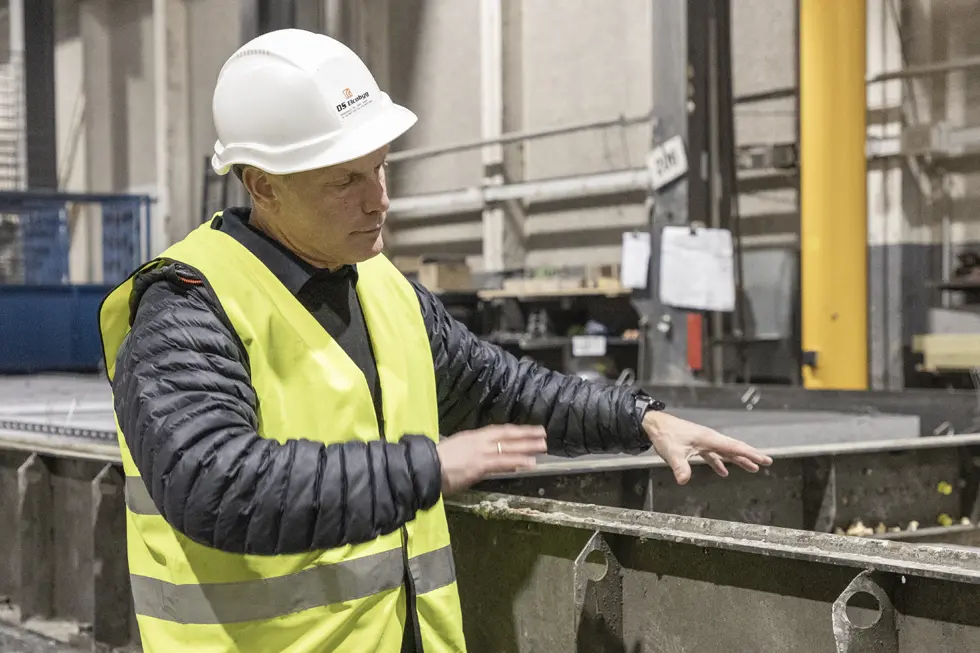
However, this does not mean that concrete should be marketed as the best solution for every construction project at all costs. On the contrary, Flemming sees one of his responsibilities as advising and guiding both architects and consultants on how concrete can best be used for each individual project.
Early involvement is crucial here.
“The point at which we engage with architects is precisely during the early involvement stage. This is where we can explain how our product can be used to its full potential,” says Flemming.
And this actually represents a shift from how he himself used to operate in the industry: “Ten years ago, it may primarily have been about selling the product, and I am, after all, a sales manager. But today, it is more important for me to see that my product has been used correctly in the construction project in question.”
For Flemming, it is important that concrete is not automatically chosen over everything else. In his own words, he is passionate about protecting our planet and using materials in the right way.
Earlier this year, a report was published on a major project spanning the concrete industry, in which several large manufacturers conducted full-scale trials using alternative binders to cement. Cement is the biggest dirty word in concrete because of its high CO2 emissions. This is due to the energy-intensive process in which minerals are heated to very high temperatures, as well as the calcination process that occurs when chalk is transformed and releases CO2. The industry is therefore searching for new ways to produce strong concrete.
The result was that there are many ways to reduce the amount of cement used, for example by replacing some of it with diatomaceous earth. The trial went so well that the solutions are already ready to be used in construction projects. However, this requires those involved in construction to be open-minded.
“Unfortunately, it is probably up to us to promote the new solutions by influencing architects and consultants and explaining that this is an option. We are the ones who need to spread the positive message,” says Flemming.
Communication alone, however, cannot solve concrete’s image crisis. The industry needs to lead the way and demonstrate how collaboration can create innovative solutions. Early involvement is where concrete specialists, architects and engineers can find common ground and learn from one another, ensuring that materials are used wisely.
“We need more hybrid structures in the future. We must not think selfishly or focus on each of us selling more within the industry. We need to think in terms of the circular economy and alternative forms of growth. We must also find ways to reuse our own materials,” Flemming elaborates.
For Flemming, it is ultimately not only about convincing architects and consultants, but also about regaining the trust of ordinary Danes.
“You can simply go out and ask people in your neighbourhood: What is concrete? They will say that they would prefer wood because it is ‘healthier’. We have not marketed ourselves well enough,” he says.
And perhaps this is precisely where early involvement and cross-sector collaboration can also make a difference: by demonstrating that concrete does not have to be environmentally harmful. When the industry leads the way and thinks holistically, circularly and openly, it affects not only construction, but also how the wider world perceives the material.
“Part of the solution is also to look back to some extent at how we built in the 1990s, before the stricter standards were introduced. In my opinion, they do not create value; on the contrary, they lead to greater material consumption in the construction industry,” says Flemming in conclusion:
”Have we actually asked ‘why?’ Or have we all simply accepted that this is just the way it is?”

About the Author
With a background as a trained journalist and marketing management graduate, Oline makes a strong contribution to digital communication across DS Gruppen. In addition, through her engaging writing style, she communicates both internally and externally – whether it is employee profiles, project news, organizational updates, or stories about our sponsorships. Oline also has prior experience with magazine articles, social media content, video, advertorials, and other areas within journalism and communication.
Articles
01 Sep 2026
Articles
06 Aug 2026
Articles
13 Jun 2026
Articles
12 Jun 2026
Articles
11 Jun 2026